- Outdoor
Learning Outside School: 15 Outings Where Kids Learn Through Play
Note: This article contains affiliate links. If you buy something through a link, we may receive a small commission. There is no extra cost to you.
Children do not only learn in the classroom. Things often stick best when they can be seen, experienced, tried out or touched for real. So an outing can be much more than just leisure time: it can spark curiosity, raise questions and show children how exciting the world is beyond worksheets and textbooks.
Whether it is nature, technology, history, animals, art or movement – many places are wonderfully suited to learning through play. And an outing does not have to be complicated or expensive. Sometimes a walk through the forest, a visit to a museum or an afternoon on a farm is all it takes.
Here are 15 outing ideas where children learn along the way – without it feeling like school.
Why children often learn especially well on outings
Children learn best when they are actively involved. When they can see, try, smell, hear or touch something, knowledge becomes tangible. A child who collects different leaves in the forest often understands nature better than through a picture in a book alone. A visit to a technology museum can explain how machines work. A trip to a lake can raise questions about animals, water or protecting the environment.
The big advantage: learning happens along the way. Children are allowed to be curious, ask their own questions and make their own discoveries. That is exactly what often sparks real interest.
1. Natural history museum: discovering dinosaurs, animals and evolution
A natural history museum is the perfect place to get children excited about animals, dinosaurs, fossils, rocks and the history of the Earth. Many children are fascinated by huge skeletons, taxidermy animals or sparkling minerals.
This dinosaur book for kids (affiliate link) is a great way to revisit the discoveries after your visit.
Along the way, they learn through play how life on Earth has developed, why species become extinct and how scientists research the past.
Children learn about: natural history, evolution, wildlife, fossils
Well suited to: children from about 5 years old
2. Farm visit: understanding where food comes from
A visit to a farm shows children that milk, eggs, fruit or vegetables do not simply come from the supermarket. They can see animals, discover fields and sometimes even help with harvesting or feeding.
This is an especially valuable outing for city kids, because it connects food and farming with real experience.
Children learn about: nutrition, animals, farming, the seasons
Well suited to: toddlers and primary school children
3. A forest walk with a mission to explore
A walk in the forest becomes much more exciting when children are given small tasks. They can collect different leaves, look for animal tracks, compare bark, listen for sounds or watch small insects.
This helps children consciously notice their surroundings. At the same time, they get moving in the fresh air and develop a better feel for nature.
Children learn about: plants, animals, the senses, environmental awareness
Well suited to: children of any age
4. Technology museum: understanding machines, trains and experiments
A technology museum is ideal for children who want to know how things work. Aeroplanes, ships, computers, engines or old machines make technology tangible.
Many technology museums offer interactive stations where children can try things out for themselves. That turns abstract knowledge into a real experience.
Children learn about: technology, physics, history, inventions
Well suited to: children from about 6 years old
5. Planetarium: experiencing stars and outer space
A planetarium can get children excited about the universe. Stars, planets, the moon, the sun and galaxies are shown in a way that is impressive and easy to grasp.
With this space set for kids (affiliate link), the topic can be explored further at home.
For many children, a planetarium visit is the first moment they truly grasp how vast space is. That often raises lots of questions – and that is exactly what makes the outing so valuable.
Children learn about: astronomy, planets, spaceflight, natural science
Well suited to: children from about 5 years old
6. Zoo or animal park: watching animals and understanding habitats
A visit to the zoo or an animal park can be more than just looking at animals. Children can compare: which animals live in water? Which need a lot of warmth? Which eat plants? Which are nocturnal?
A kids' binoculars with magnifier (affiliate link) helps little explorers observe closely.
If you shape the visit consciously, children learn a lot about habitats, species protection and the diversity of the animal world.
Children learn about: animals, habitats, species protection, behaviour
Well suited to: children of any age
7. Botanical garden: discovering plants from around the world
A botanical garden shows children how different plants can be. Giant leaves, cacti, tropical plants or fragrant herbs make knowledge about plants vivid.
A plant growing set for kids (affiliate link) brings these discoveries into everyday life afterwards.
Children can discover that plants are not just "green", but come in very different shapes, colours and functions.
Children learn about: plants, climate, ecosystems, the senses
Well suited to: primary school children
8. Children's museum: trying things out instead of just looking
Children's museums are specifically designed so children can take an active part. They are allowed to experiment, build, touch, try things out and gather their own experiences.
This is especially valuable because children do not walk passively through exhibitions here, but become part of the learning process themselves.
Children learn about: depending on the exhibition: everyday life, science, culture, history
Well suited to: nursery and primary school children
9. Historic village or open-air museum: experiencing history
In a historic village or open-air museum, children can see how people used to live, work and cook. Old houses, tools, clothing and crafts bring history to life.
Instead of memorising dates, children experience just how different everyday life used to be.
Children learn about: history, everyday life in the past, crafts, society
Well suited to: children from about 5 years old
10. Fire station or police museum: understanding jobs and safety
Many children are interested in the fire service, police or paramedics. A visit to a related museum or an open day can be very exciting.
Children learn how emergency services work, why safety matters and what happens in an emergency.
Children learn about: safety, jobs, responsibility, technology
Well suited to: nursery and primary school children
11. Lake, river or waterworks: experiencing water consciously
An outing to the water can offer many learning moments. Children can observe which animals live by the water, how waves form, why water needs to stay clean, or where drinking water comes from.
A visit to a waterworks or environmental education centre is also especially exciting if there are activities for families nearby.
Children learn about: the water cycle, animals, the environment, sustainability
Well suited to: children of any age
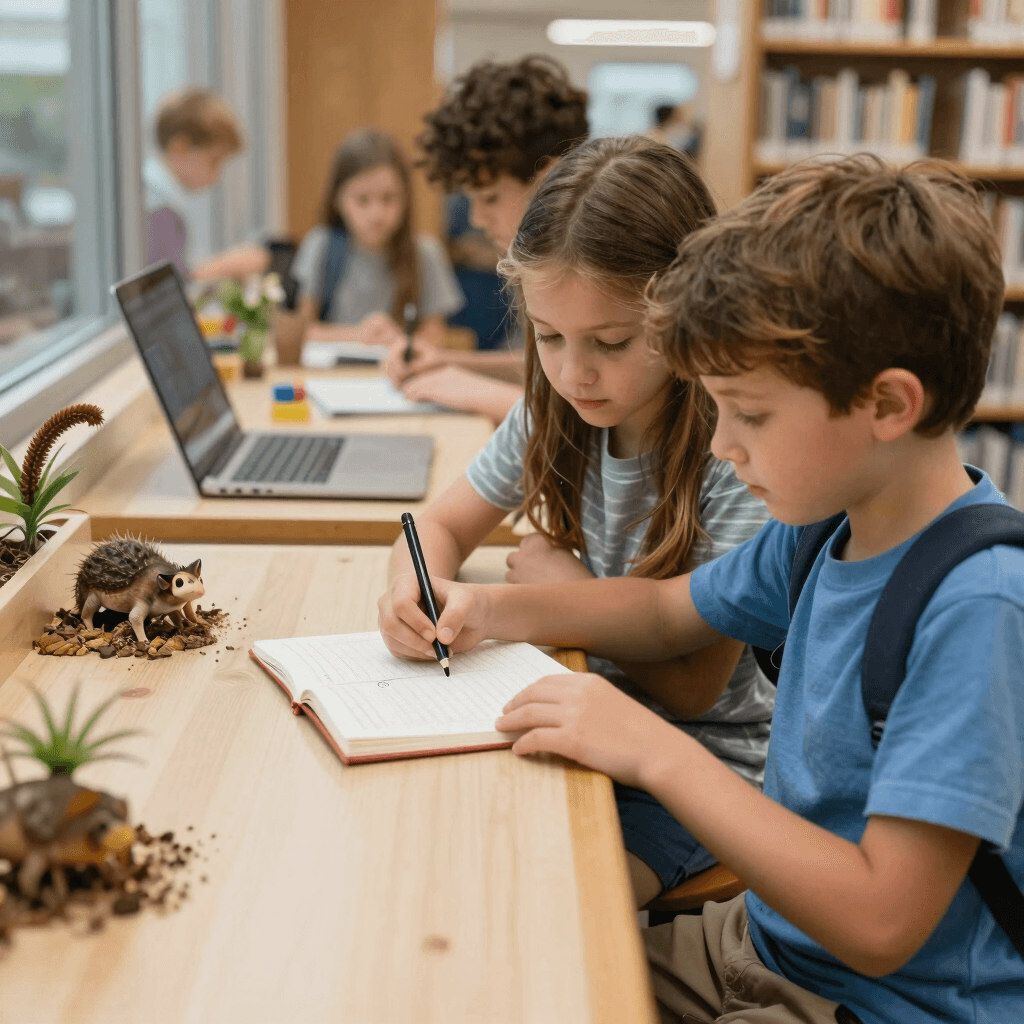
12. Library: discovering stories, media and their own interests
A library is an underrated place to learn. Children can choose books themselves, browse topics, discover audiobooks or take part in story time.
The advantage: they not only learn to read, but also to follow their own interests. Whether animals, space, football, crafts or adventure – every child finds something at the library.
A learning and reading game (affiliate link) adds extra reading and language practice at home.
Children learn about: reading, language, research, concentration
Well suited to: children of any age
13. Art museum or gallery: looking at pictures and forming their own thoughts
An art museum does not have to be boring for children. If you do not try to explain everything but instead ask questions, art can become very exciting.
For example: what do you see in the picture? Which colours stand out to you? What might the person be thinking? Would you paint the picture differently?
With a sketching and drawing set (affiliate link), children can capture their impressions afterwards.
This teaches children to look closely and put their own ideas into words.
Children learn about: creativity, perception, colours, expression
Well suited to: children from about 6 years old
14. A trip to the market: numbers, food and everyday life
A weekly market is a simple but very good place to learn. Children can get to know fruit and vegetables, compare prices, pay small amounts themselves or discover new foods.
Along the way, they learn very practically: how much does something cost? What is in season right now? What do fresh herbs smell like? Where do regional products come from?
Children learn about: nutrition, arithmetic, everyday life, sustainability
Well suited to: nursery and primary school children
15. Watching a building site, train station or harbour
Sometimes an everyday place is enough to learn a lot. A building site, a train station or a harbour can be incredibly exciting for children. They see machines, processes, jobs and movement.
Of course, such places should only be observed from a safe distance. But especially children who are interested in vehicles, trains or technology can discover a lot here.
Children learn about: technology, jobs, processes, traffic
Well suited to: children from about 3 years old
Tips: how to turn an outing into playful learning
For an outing not to feel like lessons, it should stay light and open. Children do not need to know or explain everything. It is enough for them to become curious.
It helps to give them a small question before the outing: "Which animals will we discover today?" or "What surprises you the most?" Afterwards, you can talk together about what was especially exciting.
Small ways to get involved also help:
keeping a nature diary
taking photos of exciting things
collecting three new words
drawing something they saw
doing a small experiment at home that matches the outing
What matters most: fun should come first. Learning often happens quite automatically when children are interested.
Conclusion: the best places to learn are often outside the classroom
Learning outside school does not mean children learn less. On the contrary: many experiences become especially valuable when children can experience them for themselves. An outing to the forest, a museum, a farm or the water can bring knowledge to life and strengthen curiosity.
For families in particular, outings like these are a lovely way to combine quality time with new experiences. Children discover the world, ask questions and notice that learning can happen anywhere – not just at school.
With the Unitee app you will regularly find new events, destinations and activities for families and children near you.
Discover even more with Unitee
Looking for new places to visit and exciting events? Download the Unitee app and discover more!